
★★★★★
“Had Scott’s H install a new softener to replace our old one that stopped working. They checked our iron level first and added a small iron pre-filter because our well has a little. Water has been perfect since.”
York County water is hard — limestone geology means high calcium and magnesium content in both city supply and private wells. Hard water calcifies inside water heaters, deposits scale on fixtures and glassware, reduces soap lather, and shortens the life of appliances. A properly sized salt-based water softener removes hardness minerals before they reach your plumbing. Scott's H Plumbing installs water softeners sized correctly for your household and connected to code.
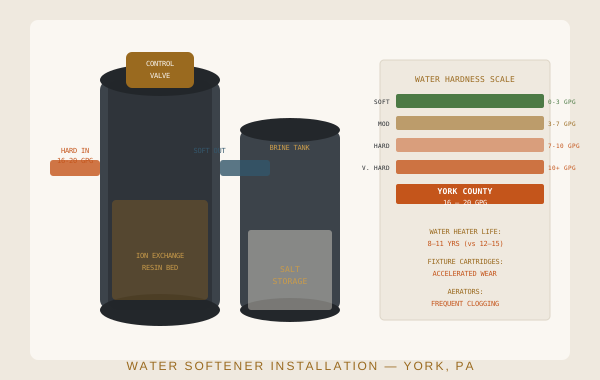
24-Hr Emergency Dispatch · York, PAYork County water hardness typically ranges from 200 to 400 milligrams per liter (11 to 23 grains per gallon) depending on the source — well water from limestone aquifers often runs harder than city supply. Water above 7 grains per gallon is considered hard and benefits significantly from treatment. A properly sized salt-based ion-exchange water softener replaces calcium and magnesium ions with sodium, eliminating scale buildup in pipes and appliances. Scott's H Plumbing installs softeners sized for your household water usage and hardness level. Call (717) 842-9770 to schedule an installation assessment.
Call (717) 842-9770 — scale buildup in your water heater and appliances reduces efficiency and shortens their life. A properly sized softener installed today protects your investment for years.
The limestone and carbonate rock geology underlying York County dissolves into the groundwater supply and into the surface water that feeds the York Water Company reservoirs. The result is water with a consistently high hardness mineral load — calcium carbonate and magnesium carbonate that precipitate out of solution as water is heated, forming the white or gray scale deposits visible on faucet aerators, showerheads, and dishwasher interiors.
Inside a water heater, scale deposits on the heating element and on the tank floor. Every inch of scale is an insulator — a water heater with significant scale buildup requires substantially more energy to heat water to temperature, which shows up in the gas or electric bill. Enough scale accumulation causes the heating element to overheat and fail prematurely. Tankless water heaters, which have narrower internal passages, are particularly vulnerable to scale-related failure and often require softened water to maintain their rated efficiency and warranty coverage.
Hard water also affects soap and detergent performance. Hardness minerals react with soap to form soap scum rather than lather, which means more product is required to achieve the same cleaning effect. Dishwashers running on hard water leave spots and film on glassware. Laundry washed in hard water feels stiff and is harder on fabric fibers. These are chronic quality-of-life issues that a water softener addresses completely.
The standard and most effective water softening technology. Ion-exchange resin removes calcium and magnesium from the water as it passes through the resin tank, replacing them with sodium ions. The resin regenerates automatically using brine from the salt tank on a schedule set to your household usage. No hardness passes through a properly functioning and sized system.
Demand-initiated softeners regenerate based on actual water usage rather than a fixed timer schedule. This reduces salt and water usage compared to timer-based systems and ensures the resin bed is fully charged when household demand is highest. We install demand-initiated systems as the standard for new installations.
The softener is installed on the main water supply line before it distributes to the water heater and throughout the house, so every hot and cold outlet delivers soft water. Outdoor hose bibs and one cold supply to the kitchen are typically bypassed per best practice to preserve a non-softened drinking water option and avoid softening irrigation water.
Older softeners that are no longer regenerating correctly, have failed resin, or are undersized for current household usage are replaced with correctly sized new units. We remove and dispose of the old softener as part of the replacement service.
Homes with iron, sediment, or pH issues in addition to hardness need filtration upstream of the softener — iron in particular fouls softener resin quickly and shortens its effective life. We install the complete treatment train in the correct sequence so each stage protects the next.
Every softener we install includes a properly configured bypass valve that allows the softener to be taken offline for service without shutting off water to the house. The drain connection for the regeneration cycle is installed to code with an air gap to prevent backflow into the softener drain.
Call (717) 842-9770 and describe your situation — known hardness level from a water test, visible scale problems, number of people in the household, and whether you have a current softener that needs replacement. If you do not have a water test, a simple field hardness test can be done at the visit. These numbers determine what grain capacity the softener needs.
The technician calculates the daily grain removal requirement based on household size and hardness level, and selects the appropriate resin tank and brine tank capacity. The installation location — typically a utility room, basement, or garage — is confirmed to have the floor drain access and plumbing connections required.
The softener is connected to the main supply line, bypass valve installed, drain line run to an acceptable disposal point, and the regeneration controller programmed for your household usage. We run the first regeneration cycle to confirm everything operates correctly before leaving, and walk you through salt refilling and routine maintenance.
Call (717) 842-9770 — describe what you are experiencing and we will handle the rest.
An undersized softener runs out of capacity between regeneration cycles and lets hard water through. An oversized softener wastes salt and water on unnecessarily frequent regeneration. We calculate grain capacity based on your actual household size and measured hardness level — not a generic estimate.
A softener connected without a proper bypass valve cannot be serviced without shutting the whole house water off. A drain line without an air gap can allow brine to backflow into the drain system. We install to code with bypass valving and proper drain connections on every job.
Installing a softener on water with high iron content fouls the resin and ruins the unit quickly. We check iron levels and install upstream iron filtration where needed to protect the softener resin and ensure long service life.
Timer-based softeners regenerate on a schedule regardless of actual water usage — wasteful when household demand is low. We install demand-initiated systems that regenerate only when the resin bed is actually exhausted, reducing salt and water consumption.
We walk you through how to set the salt level, what type of salt is appropriate for your unit, and how to recognize when the regeneration cycle is running correctly. You should understand your own equipment before we leave.
“Had Scott’s H install a new softener to replace our old one that stopped working. They checked our iron level first and added a small iron pre-filter because our well has a little. Water has been perfect since.”
“Finally got a water softener installed after years of scale buildup. Showerhead used to block up every few months. Six months since installation and not a single problem. Should have done this sooner.”
“Good job installing the softener and explaining how to maintain it. They ran the drain line properly to the floor drain and put in a bypass valve. Solid workmanship.”
Open the brine tank and check the salt level monthly. The salt should be above the water level — typically the tank should be at least half full. Salt exhaustion causes the softener to regenerate with no salt, passing hard water into the home.
Over time, a sludge layer accumulates at the bottom of the brine tank from salt impurities. Clean the brine tank completely once per year — remove remaining salt, flush the tank with water, and refill with fresh salt.
A salt bridge is a hardened crust that forms above the water level in the brine tank, giving the appearance of salt present when the space below is empty. Probe the salt mass with a broom handle monthly to break up any bridges before they cause a regeneration failure.
Use an inexpensive hard water test strip at a cold tap that passes through the softener. Output hardness should be near zero. Rising hardness indicates the softener needs servicing, the resin is exhausted, or the regeneration cycle is not completing correctly.
Water softener resin beads have a finite life span and benefit from professional cleaning or eventual replacement. A professional service call every 5 years checks resin condition, valve function, and regeneration timing.
We install water softeners throughout York and every community in our service area. Call to schedule an assessment and installation date.
Water softener installation cost depends on the grain capacity of the system required for your household, whether upstream iron filtration is needed, and the plumbing configuration at the installation location. Replacing an existing softener in an already-plumbed location is simpler than a first-time installation that requires running new supply connections and a drain line.
We give you a price before any work starts. That price includes the bypass valve and drain connection — not add-ons after the fact.
Call (717) 842-9770. We assess your water hardness and household usage and give you a price for the correct system before ordering anything.
York County water hardness varies by source. York Water Company supply typically runs in the moderately hard to hard range, around 10 to 15 grains per gallon. Private well water in York County limestone areas commonly runs harder. Water above 7 grains per gallon causes noticeable scale buildup in appliances and fixtures. A simple field test or a full water test confirms your hardness level, and we can do a field test during the assessment visit.
Salt usage depends on the grain capacity of the system and how often it regenerates, which is determined by household water usage and hardness level. A demand-initiated softener sized correctly for the household typically uses 6 to 12 pounds of salt per regeneration cycle and regenerates every 3 to 7 days depending on usage. Most households purchase one 40-pound bag of salt every month or two. Efficient modern softeners use significantly less salt than older timer-based units.
Softened water is generally considered safe to drink. The sodium added during ion exchange is typically 20 to 50 milligrams per 8 ounces — similar to a slice of bread. People on sodium-restricted diets may prefer to bypass the kitchen cold tap from the softener, which is standard practice on most residential installations. The outdoor hose bibs are also typically bypassed to avoid softening irrigation water, which does not benefit from softening.
Yes, but iron must be addressed before the softener, not by the softener. Iron in well water fouls ion-exchange resin, reducing its effectiveness and shortening its service life significantly. An iron filtration system upstream of the softener removes iron before the water reaches the resin bed, protecting the softener and ensuring it functions correctly on the hardness minerals it is designed to remove.
Pellet-form evaporated salt (sodium chloride) is the recommended choice for most residential softeners — it dissolves cleanly and does not leave residue in the brine tank. Rock salt is cheaper but contains impurities that accumulate in the brine tank and require periodic cleaning. Solar salt is a middle option. Potassium chloride can be substituted for sodium chloride in systems used by people avoiding sodium, though it costs more and the softener may need a slight adjustment to the salt dose setting. We recommend the salt type appropriate for your specific unit when we install it.
Sometimes. Common causes of a softener that no longer produces soft water include a failed regeneration controller, a stuck bypass valve, salt bridging in the brine tank preventing brine from forming, or exhausted resin that no longer holds capacity. Salt bridges are often resolved without parts replacement. A failed controller or exhausted resin may make replacement more cost-effective than repair, particularly in older units. We diagnose the specific failure before recommending repair versus replacement.
Iron filters, sediment filters, carbon filters, and UV disinfection for York County well and city water quality issues.
Read more →Water heater installation including tankless models that require softened water to maintain efficiency and warranty coverage.
Read more →Well pump inspection, repair, and replacement for York County homes on private well water supplies.
Read more →Every year a water heater runs on hard York County water, it accumulates more scale. Every appliance connection shortens its service life. A water softener pays for itself in appliance protection, reduced energy costs, and better quality of life in the home. Call (717) 842-9770 and we will size and install the right system for your household.
Correctly sized, properly installed, and explained before we leave. One call ends the hard water problem.