
★★★★★
"Old galvanized pipe throughout a 1952 house. They replaced everything with PEX in two days. Pressure is night and day different. No more rust in the water. Should have done it years ago."
Galvanized steel and aging copper supply lines fail slowly, then suddenly. Low pressure at every fixture, rust-colored water, pinhole leaks in multiple locations, and frequent repairs that never fully resolve the problem are all signs that the supply system has reached end of life. Scott's H Plumbing repiping services replace failing supply lines throughout York County with PEX or copper, restoring full pressure, clean water, and a plumbing system that will not need attention for decades.
24-Hr Emergency Dispatch · York, PAA home in York, PA needs repiping when the supply system — the network of pipes carrying water from the meter to every fixture — has deteriorated to the point where repair is no longer cost-effective. The most common scenario is galvanized steel pipe, standard in York County homes built before 1960, that has corroded internally to a fraction of its original interior diameter. Other scenarios include copper pipe with recurring pinhole leaks from York's mineral-rich water, polybutylene pipe from the 1980s and early 1990s that has become brittle, and any supply system with multiple active leaks. Scott's H Plumbing replaces failing supply systems throughout York County with PEX tubing, which resists scale, is flexible enough to route with minimal wall opening, and carries a manufacturer service life of 25 years or more. Call (717) 842-9770 to discuss whether your home's plumbing has reached the point where repiping is the right next step.
Call (717) 842-9770 — house-wide pressure problems and discolored hot water are often signs that the supply system rather than a single fixture is the source of the problem.
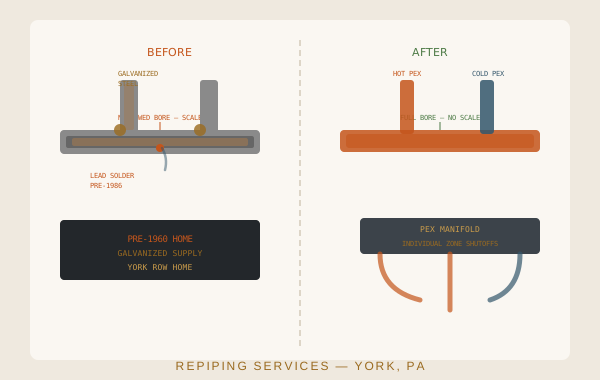
Galvanized steel pipe — steel coated with a layer of zinc to resist corrosion — was the standard residential supply material from roughly the 1880s through the late 1950s in York County. The zinc coating provides protection for decades, but York's mineral-laden water accelerates its depletion. Once the zinc is gone, the steel beneath begins to corrode from the inside outward. The corrosion products — iron oxides and manganese compounds — do not simply dissolve into the water. They precipitate and adhere to the pipe walls, building up over years into a rough, constricted bore.
A galvanized steel pipe installed in 1940 with an original interior diameter of three-quarters of an inch may have an effective interior diameter of three-eighths of an inch or less by the time a York homeowner notices the pressure problem. That reduction in bore diameter is not uniformly distributed — it tends to be worst at horizontal runs and at fittings where water velocity changes, which is why pressure tends to be worst at the fixture farthest from the meter rather than uniformly bad throughout the house.
The other failure mode in York's copper pipe inventory is pinhole leaks. York's water is hard and slightly acidic, a combination that creates galvanic conditions inside copper pipe over decades. The corrosion produces small pits in the pipe wall that eventually perforate. One pinhole leak is a repair call. Three pinhole leaks in the same system over two years is a supply system that is failing, and each additional repair is money spent against a system that will need replacement regardless.
A complete replacement of all supply lines from the main shutoff to every fixture in the house with PEX tubing. PEX is flexible enough to snake through walls with minimal drywall cutting, resists mineral scale buildup, and does not corrode or develop pinhole leaks. The standard choice for galvanized replacements and polybutylene replacements in York County.
Galvanized steel supply lines that have corroded internally to the point of restricting pressure are replaced in full. Partial replacement of a galvanized system — replacing only the visible section — rarely resolves the pressure problem because the restriction is typically distributed throughout the run. We assess the full system before recommending scope.
Copper supply systems with recurring pinhole leaks in York's mineral-rich water can be replaced with PEX tubing, which is not susceptible to the same galvanic corrosion mechanism. A copper-to-PEX repipe addresses the source of recurring leaks rather than patching them one at a time.
Polybutylene pipe installed in the 1980s and early 1990s has become brittle with age and is now known to fail without warning. Homes in York County built or replumbed during that period may have polybutylene supply lines that should be replaced regardless of whether they are currently leaking.
Not every home requires a full whole-house repipe. When failure is concentrated in a specific section — a single floor, a specific wing of the house, or the hot water distribution only — a partial repipe addresses the problem area without the cost and disruption of a full replacement. We assess which scenario applies before recommending scope.
After new supply lines are run, all fixtures — sinks, toilets, tubs, showers, washing machine, dishwasher, refrigerator — are reconnected and tested. Drywall openings are cut cleanly and left ready for patching, and any access panels used are reinstalled.
Call (717) 842-9770 — describe what you are experiencing and we will handle the rest.
Call (717) 842-9770 and describe the symptoms: pressure, water quality, known leak history, and the approximate age of the home's plumbing. The assessment visit confirms pipe material, system layout, and the scope of replacement needed. You receive a clear quote for the work before any commitment is made.
New PEX or copper supply lines are run from the main shutoff through the walls and floors to each fixture in the house. PEX is routed with minimal drywall cutting by snaking through existing cavities where possible. Access openings are cut cleanly and marked for patching. The main water supply is off during the repipe and restored as new lines are connected.
All new lines are pressure-tested for leaks before walls are closed. Every fixture is reconnected, valves are verified to operate, and water pressure and hot water delivery are confirmed at multiple points in the house. Drywall openings are left ready for patching — we do not patch drywall, but we leave the openings clean, clearly located, and ready for your contractor or for a straightforward DIY patch.
PEX is the standard repiping material for most residential repipes in York County today. It is flexible, which means it can be routed through wall cavities with far fewer cuts than rigid copper, it resists mineral scale buildup on its interior surface, and it does not corrode. PEX connections use mechanical fittings or crimp rings rather than solder, which eliminates the open-flame work required for copper and makes the installation faster and cleaner in tight spaces.
Copper remains the right choice in certain situations: where local code requires copper for specific applications, where aesthetic considerations call for exposed visible supply lines, or where a homeowner is committed to copper for durability reasons and the water chemistry in the area is compatible with a long copper service life. We install both and will recommend the material that makes sense for your specific home and situation.
We assess the full supply system before recommending partial or whole-house replacement. A partial repipe that leaves failing galvanized pipe in the walls is not a lasting solution, and a whole-house repipe on a system that only has a localized problem is not necessary. The recommendation matches the actual condition of the system.
PEX installation is routed through existing wall cavities wherever possible, keeping drywall cuts to a minimum. We plan the route before cutting so openings are located where they are easiest to patch and least visible.
Every opening is cut cleanly, marked, and left ready for patching. You receive a plain explanation of what was replaced, what was found behind the walls, and what the new system consists of before we leave.
Two decades of repiping experience in York County means we have worked in every floor plan configuration common to the area, from tight row homes in downtown York to larger mid-century ranches in the surrounding townships.
All new lines are pressure-tested for leaks before any access openings are closed. A pinhole leak discovered under pressure before the wall is closed is a five-minute fix. The same leak discovered three months later is a water damage claim.
"Old galvanized pipe throughout a 1952 house. They replaced everything with PEX in two days. Pressure is night and day different. No more rust in the water. Should have done it years ago."
"Third pinhole leak in copper in eighteen months. Scott's gave me an honest assessment — the whole hot side needed to come out. They were right. No leaks since and pressure is better than it's been in years."
"They kept the drywall cuts to a minimum and left everything clean. Explained the whole system to me after. Very professional. Pressure test before they closed anything up gave me real confidence in the work."
Repiping cost depends on the size of the home, the number of fixtures, the material selected, and the complexity of routing through the existing structure. A small two-bedroom row home with accessible walls is a simpler job than a multi-story home with finished ceilings on every level. Partial repiping of a specific section costs less than a full whole-house replacement.
We assess the home, determine the scope, and provide a fixed quote before any work begins. The quote includes labor, materials, and fixture reconnection. It does not include drywall patching — we leave the openings clean and ready, and you arrange patching separately or handle it yourself.
Call (717) 842-9770 — we assess the system, determine the scope, and give you a firm price before any commitment.
After a whole-house repipe, flush every fixture — faucets, showers, hose bibs — for 2–3 minutes to clear installation debris from the new lines. Remove and clean aerator screens on all faucets after this initial flush.
New compression fittings, crimp rings, and threaded connections sometimes weep slightly as they settle under normal operating pressure. Inspect all accessible connections at 30 days and snug anything showing moisture.
After repiping, test pressure at a hose bib, a kitchen faucet, and an upper-floor bathroom to confirm balanced pressure throughout the new system. Significant differences suggest a sizing or valve issue to address.
Unlike galvanized or copper, cross-linked polyethylene pipe does not corrode. Once installed correctly, PEX supply lines should not require any material-related maintenance for the life of the home.
Repiping replaces supply lines only. The drain system — cast iron stacks, clay sewer laterals — is separate. If your home is old enough to have needed repiping, a camera inspection of the drain system is worthwhile to assess its condition.
We provide repiping services throughout York and the surrounding communities. Pick your town for local information, or call to confirm coverage.
A typical whole-house repipe in a York County home takes one to three days depending on home size, the number of fixtures, and how accessible the walls are. A small two-bedroom home with relatively open access can be completed in a single day. A larger multi-story home with finished ceilings throughout takes two to three days. The main water supply is off during active work and restored at the end of each day when possible.
PEX repiping typically requires significantly less drywall cutting than copper because PEX is flexible enough to be fished through wall cavities and around obstacles without straight runs. The number of cuts depends on the home's layout and how accessible the wall cavities are. We plan the routing before cutting to minimize the number and size of openings and to place them where they are easiest to patch.
PEX carries a manufacturer service life of 25 years or more and is not susceptible to the pinhole leak failure mode that affects copper in York's mineral-rich water. It is currently the most widely used residential repiping material in the country and is accepted under Pennsylvania plumbing code. Its flexibility also makes it more resistant to freeze damage than rigid pipe, which is relevant in York's climate.
You do not need to vacate the house, but water will be off during active work. For a multi-day repipe, water is restored at the end of each day where possible. The work itself is not unusually disruptive in most areas of the house — the main impact is no running water during the day while work is in progress.
Most York County homes built before the late 1950s originally had galvanized steel supply lines, but many have been partially or fully replaced over the decades. The only way to know is to look at the exposed pipe under sinks, at the water heater connections, and at the main shutoff. Galvanized steel is dull grey and non-magnetic coating over steel (a magnet will stick to it). Copper is orange-brown. PEX is flexible plastic tubing. It is common to find a mix of materials after partial work over the years.
If the low pressure is caused by internal corrosion buildup restricting flow inside galvanized pipe, repiping will restore full pressure. If pressure is low because of an issue at the meter or the main supply line from the street, repiping the house will not solve it. We check pressure at the main shutoff during the assessment to determine which is the cause before recommending a repipe.
A whole-house repipe is an ideal time to replace an aging water heater with a properly sized new unit before the old one fails.
Read more →Older homes with failing supply lines often have aging drain lines too. A camera inspection shows the condition of the drain side before problems develop.
Read more →24-hour emergency response for active pinhole leaks or supply line failures that cannot wait for a scheduled appointment.
Read more →A failing supply system does not improve with individual repairs. Each leak patched is money applied against a system that will need replacement regardless. Call (717) 842-9770 and we will assess your system honestly — if repiping is the right answer, we explain why. If a targeted repair can hold the system another several years, we tell you that instead.
Full pressure. Clean water. A supply system that will not need attention for decades. Call to discuss your home's situation.